December 6, 2007

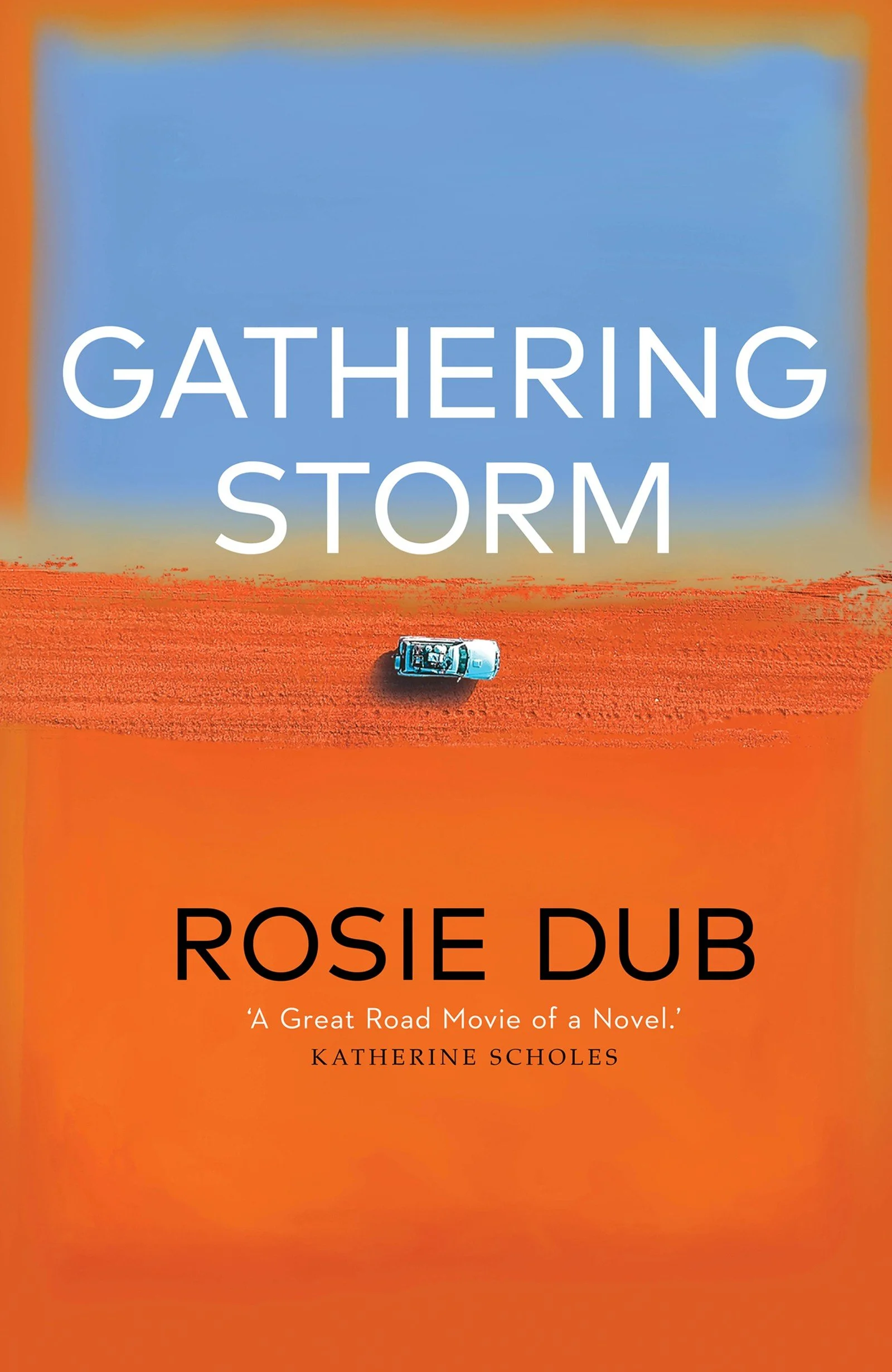
An unforgettable journey will unlock a lifetime of lies. . .
English artist Storm Cizekova grew up believing that her mother died when she was born. But then Storm finds a photo of herself in the heart of the Australian desert - and in her mother’s arms.
Haunted by unanswered questions, Storm embarks on a journey of self-discovery that will challenge everything she holds dear: her family history, her art, even her relationship with her partner Max. Who is she really, and where does she belong?
Her search will take her from the snow-covered Malvern Hills in England, to the rich red heart of the Australian outback. Retracing her mother’s footsteps through the stark beauty of the outback landscape, Storm hopes to find the courage to confront some shocking truths from her past and the strength to face her future.
Excerpt
. . . Words have power. They change people. They cause revolutions, both social and personal. They flatter, they please, they move. And they hurt. I have never believed in the old proverb ’sticks and stones may break my bones but words can never hurt me.’ Like many others, I learned from experience that like stones, words can be weapons, and they are dangerous. The wrong word can break something inside a person. A stray sentence, overheard by a child, can burrow deep, building layer upon layer of scar tissue around it, changing the course of that child’s life, so that they live every day in reaction to it. As a child I was drawn to words, but I was also afraid of them. Reading helped me to see that like stones, words can be used to create something powerful and beautiful. Much later again, I realised that like a stick used to splint a broken bone, words can also be used to heal.
Writing began as a source of solace in my turbulent young adult years – though looking back now, I see how turgid my creations were. But eventually I began to develop a style, a voice and a small amount of self discipline. I began to understand that writing wasn’t all about inspiration. That becoming a writer was equivalent to agreeing to a lifetime’s apprenticeship. At least 90% of writing is craft based, which involves learning many technical skills – building three dimensional characters, plotting, structuring, exposition, pace, tension, description, dialogue. . .Over time these skills developed. I wrote short stories and travel pieces – some of which were published. I completed a BA in writing and literature and then went on to do an MA in creative writing in Britain. To support myself I began assessing manuscripts for literary agents and publishers in the UK. Then, back in Australia I continued editing, taught creative writing, and eventually went back to my early love - myths and symbols.
Despite many setbacks, I have continued to write, with small successes – publications and grants - luring me on every time I was tempted to give up. Nowhere Man, my first novel, about a homeless man living on the streets of London, was a study of identity and statelessness. It found me agents in the UK and Australia, and was admired and rejected by publishers who believed it was too bleak to sell as a first novel. I wrote another novel, Gathering Storm, less bleak, but still exploring the same themes, this time through family history and genetic inheritance, but also from a broader cultural perspective, in relation to nationhood and citizenship. In seeking the truth about her past, the protagonist, Storm, searches forwards in the form of a journey, backwards into history, to the source of her problems and metaphorically inwards to uncover the wounds which have formed her. As the story unfolds, Storm moves towards an understanding of psychological and physical exile and finally towards resolution of the conflicts within herself. In a way Gathering Storm is a coming-to-self novel. It is a work of fiction but its themes mirror my own.
All my life I have stayed close to storytelling, drawn to it in an irresistible way. Perhaps it was linked in some way to my adoption as a baby, an attempt to articulate a wound that was preverbal. Or my way of not just healing the past, but creating something beautiful from it. I can’t remember the exact moment when I realised that writing can be a healing process. It was a culmination of years of experience as a teacher, editor and writer, which made it clear to me that writing is a cathartic process for many people – a way of expelling or even just looking at the demons that haunt them. The seemingly simple act of framing a story, or understanding the motivation of a single character can challenge the foundations on which a person has lived their life. I became fascinated with the transformative potential of both the process of writing and of story itself. Last year I began a PhD and embarked on another writing journey – this time into non fiction. My thesis, Story: Mapping the Journey to Self, explores the structure of stories and storytelling as metaphors for the inner journeys we make.
What is it that stories give us? What makes them so important in our lives? According to Christopher Vogler in his book, The Writer’s Journey, ’stories have the power to heal, to make the world new again, to give people metaphors by which they can better understand their lives.’
As a child stories provided an escape for me and a window into other ways of living. As an adult they became a mirror in which I could explore myself. Stories are a natural part of us, deeply embedded in our psyche. They impose order on chaos. They enable us to reach out and connect with each other. They provide us with ways of thinking about how to live within our society, helping people to place themselves in relation to the world. And they help us to make life meaningful. Through story we can understand the transitions within our lives, by looking back to see the cause and effects that have led us through time. We can identify those dramatic movements from one stage to another: childhood to adolescence, to adulthood, marriage, the birth of children. . . But we can also look forward and learn to accept through story, the inevitability of the transition into old age and ultimately, death.
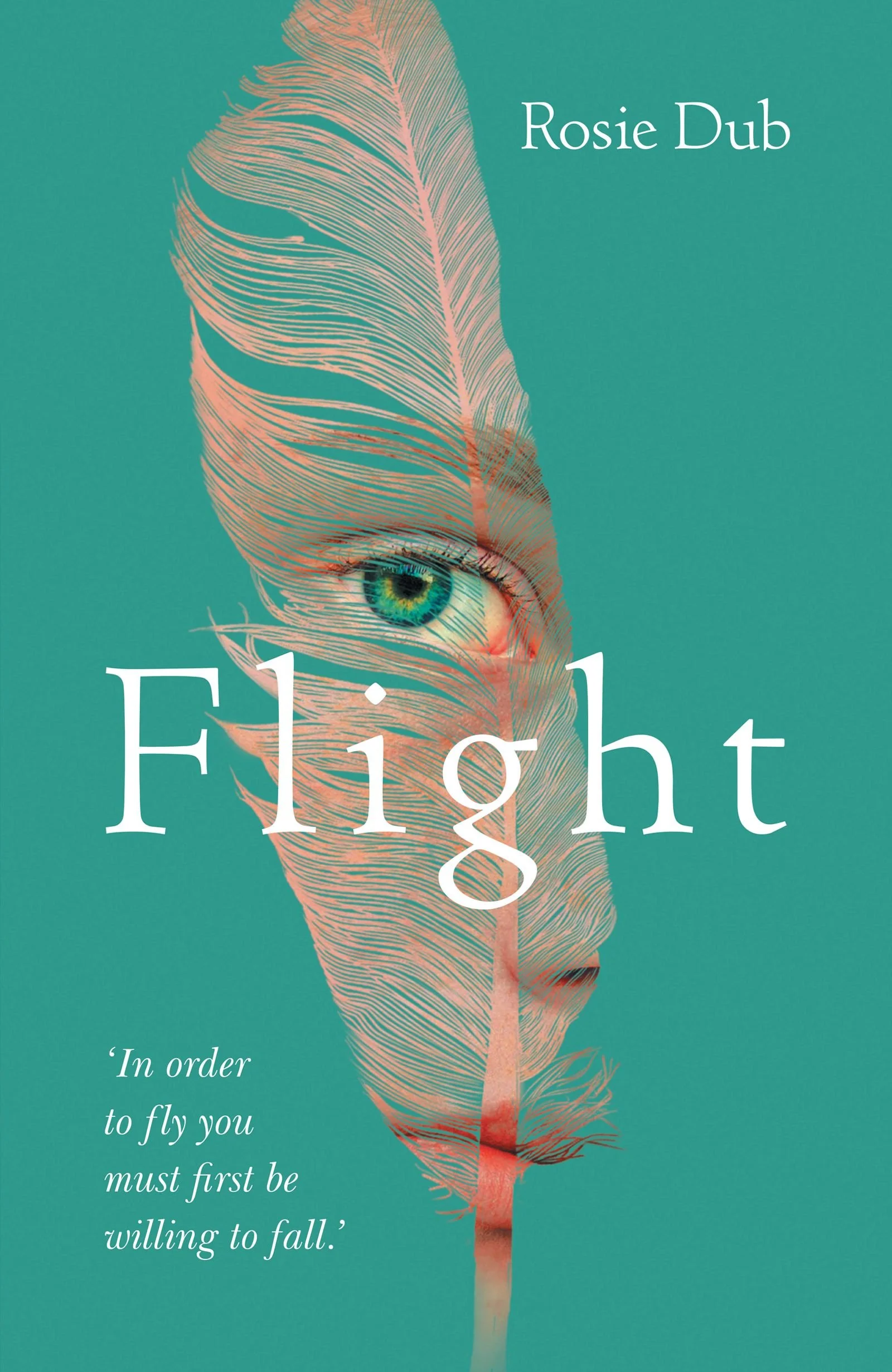
On one level stories are pure entertainment. On another level they serve to reinforce the social order and prevailing attitudes. But on a third level, story is subversive, in that its very structure is a map of the process of becoming oneself. As both a reader and a practicing writer I have come to believe that stories are linked to personal evolution, they are metaphoric maps for the developing self. Although stories wear an infinite variety of costumes, there is a fundamental commonality between them. No matter how sophisticated our storytelling has become, how many flashes forward and backwards, how many diversions, there is still a basic structure that can be traced right back to humanity’s earliest stories - and by implication to blueprints of our common psychology. Whatever their genre or medium, many contemporary stories mirror heroic myths, both in their structure and in the elements that make up their plots. Each story involves a character leaving the safety and stasis of their ordinary world and being plunged into a new and dangerous world, one in which they don’t know the rules and where they must undergo a series of adventures. The second stage of the journey involves accepting change – stepping into the abyss with no idea what lies ahead. Like birds we must be willing to fall in order to fly. Risks are taken, and if successful there is a reward of some kind. The final stage involves returning to the ‘ordinary world’, understanding and integrating the reward and using it as is appropriate. A new status quo is reached and the hero has changed in some way.
According to Vogler, ‘The Hero’s Journey and the Writer’s Journey are one and the same. Anyone setting out to write a story soon encounters all the tests, trials, ordeals, joys and rewards of the Hero’s journey. . . Writing is an often perilous journey inward to probe the depths of one’s soul and bring back the Elixir of experience. ‘
The very act of writing is a heroic journey. It changes the writer. It is an act of faith. To write a novel is to descend into the underworld or step into the labyrinth, with only a few clues and no guarantee of a way back out again. To write a novel is to step beyond your limitation, embarking on a journey with no known destination and often no ticket. It’s a dangerous process, exhausting and filled with apprehension, but it’s also a magical journey. Aside from the joys of becoming a mother, I can think of nothing more rewarding.
July 18, 2006
In a small, dim hospital room sits a man, his large frame awkward in the vinyl chair provided for visitors. In the bed is a woman. He watches her. His mother. Looks intently, searching for something that will make him believe this is really her. She is changed almost beyond recognition. Her body is shrunken. Sagging skin and bones. Rubble he thinks, just rubble, ready to be gathered up and disposed of. His body which is already big, feels huge. Feels like a monster, bursting out of its clothes. His knees point upwards, his elbows reach out beyond the arms of his chair. For the first time in many years his physicality seems obscene.
Hooked onto the metal bedstead is a sign. The words scrawled casually in black felt pen. Evelyn Macleod. If he is to believe these words, then this is his mother. Evelyn, he thinks, sounding the word out in his head. Even her name is strange. He has never called her that. Mum, or mother, probably even mummy, when he was small enough. But he’s big now, very big, and underneath the blanket his mother’s body is almost absent. Just a skeleton, He imagines coming out of that. Her screams as his head forces it’s way into the world. Merciless, the pain unremitting, breaking her apart. It had been like that when Lily arrived and he’d watched his wife become a stranger with the pain he couldn’t share.
(more…)
I’m watching the lights. . . red, yellow, green, yellow, red, green, yellow, red . . . tapping my feet, feeling the frustration rising up inside me, foul tasting like vomit. . Thirty minutes. Thirty five minutes. . . redyellowgreenyellowredgreen. . . Forty minutes .. Tapping my feet. . . I’m going to scream. We edge forward, Maddy cheers in the backseat and I laugh, the frustration subsiding for a minute. But we’re still stuck, can’t go backwards or forwards, can’t turn around. I imagine pressing a button and wings sprouting from the sides, we’d fly past everybody, straight into the supermarket.
‘How’d that be Maddy?’ I ask.
In the rearview mirror I see her smile, but she’s intent on something else and when I turn round she’s playing with the door locks, opening them.
‘Shut it’, I shout. Terrified someone will open her door and drag her away from me. That’s what happens here in the endless traffic jams, disaffected people opening doors, smashing windows, bashing drivers, stealing bags. . . maybe even children.
(more…)
July 15, 2006
The silent dark is broken by the padding of feet, drawing me slowly out of the depths of dreaming. The bedroom door opens a fraction, letting in a thin rectangle of light, then closes, drawing out the light once again. Something else has slipped in with the light. I strain my ears, listening for clues, but there’s only a sixth sense of another presence. Then comes a sigh, softer than the gentlest breeze, and a small sleepy body slips in beside me. Inside the covers, a cold foot presses on my belly.
On winter mornings the darkness lingers. I expect my children to wake with the light, later each morning, until the solstice, but that isn’t what happens. Instead they wake early, 6am, 5am, sometimes even 4am, and shuffle around the house in the cold, waiting for the sun, expecting breakfast and stories and warm fires from me. Every winter I make up rules. Tell them they mustn’t wake so early. Tell them it isn’t fair. Tell them I won’t. But I always do.
They try. For minutes at a time they hold back their restless energy and lie in bed, searching their senses for morning clues. They listen for the stillness before dawn, the distant rush of cars, birds stirring, a change in the feel of things. . . They listen until the exquisite pain of anticipation propels them out of bed and into the new day.
(more…)
July 7, 2006
‘Nowhere Man’ is set in concentric airports, literal and then increasingly metaphoric and spiritual. Ivan, the central character, escapes his thirteen years of life in an unnamed airport, only to discover his need for the safety of a psychic terminal. Nowhere Man offers a bleak vision of contemporary identity, nation, citizenship and freedom and a spectacular, satiric, anti-Dickensian view of London’s streets.’
Dr Eva Sallis
(more…)
Chapter One
Ivan tastes every angle of his moment. It is sweet, but tinged with bitterness. With a sweeping gesture he brushes the bitterness aside. It is not important. Today he is going somewhere. Today he is brimming with well being. He brings his hands to his mouth, kisses the ends of his fingers and waves benevolently to the air hostesses, so perfect in their little uniforms, their hair tucked neatly into place, their well wishes gratefully received.
‘Farewell, farewell,’ he cries before being whisked into a tunnel and sucked along with the hundreds of passengers. And in this tunnel there is just the faintest hint of the seasons. Underneath the stifling internal atmosphere he is so used to, Ivan can sense, almost smell the cold winter air of outside. He can’t believe it. Not really. After so long he has finally arrived. A dream has come true.
But at the very last moment the people before him stop suddenly, quite arbitrarily it seems, and everyone is forced to stand around under the ugly glare of fluorescent lighting with nothing to look at but each other. All of a sudden they are shy, they fiddle with baggage, peer at their passports, straighten hair and collars, avoid each others eyes. Ivan stands on the tip of his toes, staring wildly out over the sea of heads, trying to grasp what is happening ahead. He too avoids the eyes of others, not wanting to witness their guilt and fear, nor wishing to reveal his own, sensing somehow that when eyes begin to meet, then panic will follow. (more…)
in the darkness behind
closed eyelids
you can sometimes see
the rounded belly
flying fists
a foetus curling
away
only at dawn
when dews golden drops
sit glistening poised
on the perfect symmetry
of the spider’s web
can you see
the baby
strung
trembling
between worlds
(more…)
March 23, 2006
I’m sitting next to Tim in the van, daydreaming, hands cradling my rounded belly, the baby lulled quiet by the engine and the gentle rhythm of the road. In the back, the children are asleep, mouths wide open, red hot faces and damp sticking hair. When they wake we will stop for lunch and after lunch we will move on again. We’re not going anywhere in particular, just meandering, letting one thing lead to the next.
After months on the road our days have formed a regular rhythm. Sometimes the children cry and grumble and the van fills with a sharp tension. Sometimes they play happily together and Tim and I spend time savouring long conversations. Often we sing along to children’s tapes, songs and nursery rhymes, played over and over. But there are also quiet times like now, when the children sleep or just stare out. Then we pass hours moving through flat landscape with low bush, termite mounds for as far as we can see, dry riverbeds, the occasional car … Regularly we see kangaroos, usually dead on the side of the road, their bodies swollen with the heat, or carcasses half devoured by Wedge Tailed Eagles who rise into the sky as we pass. The monotony has its own sort of beauty. There’s something hypnotic about it, something about the vast expanses that makes us look inward.
(more…)
People give all sorts of things away:
opportunities, newspapers,
old clothes, poker hands,
even their hearts.
Sometimes a baby.
(more…)